
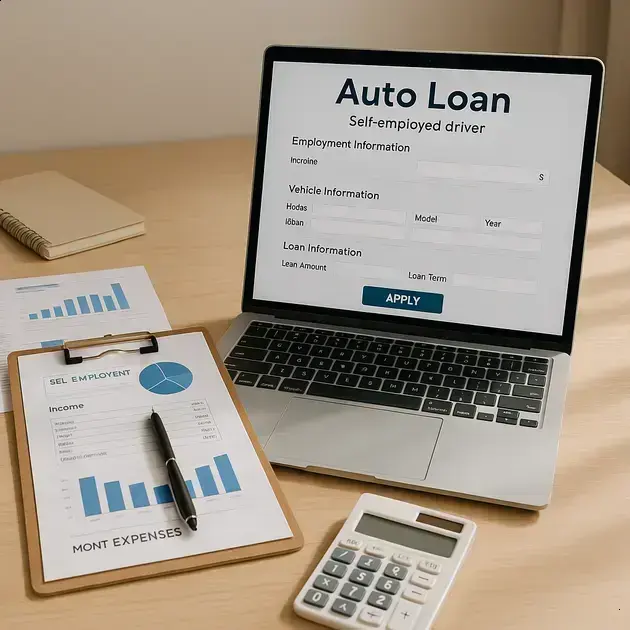
Auto Loans for Self-Employed Drivers
Have you ever wondered how self-employed drivers get approved for auto loans despite irregular income? The process might seem daunting, but you’re not alone in this struggle. Many drivers juggling their own businesses face similar hurdles.
Auto loan self-employed applications require a different approach compared to traditional salaried applicants. Banks and lenders want proof that payments will be steady, even if income comes from varied sources.
Stick around, and I’ll walk you through the common challenges and practical tips that can seriously boost your chances of landing that car loan–without the usual headaches.
Understanding auto loans for self-employed drivers
Auto loans for self-employed drivers function differently than traditional auto loans due to the variable nature of income. Lenders need to verify your earning stability before approving the loan.
Key Factors Lenders Consider
- Proof of income: Lenders require detailed documentation such as tax returns, profit and loss statements, and bank statements from the past 2 years to assess consistent earnings.
- Credit score: A good credit score increases your chances of approval and better interest rates. Aim for a score above 650.
- Down payment: A larger down payment reduces risk and can lead to better loan terms.
Self-employed drivers often face challenges in providing standardized documents, so understanding lender requirements is crucial.
Documentation Required
- Completed personal and business tax returns for the past 2 years (IRS Form 1040 with Schedule C)
- Bank statements from the past 6–12 months
- Profit and loss statements prepared by an accountant
- Proof of business license or registration
- Valid driver’s license and proof of residence
Types of Auto Loans Available
There are specific loan products and lenders that cater to self-employed drivers:
- Traditional bank loans: Offered by banks such as Wells Fargo and Chase, require extensive documentation but often have competitive rates (see wellsfargo.com/auto-loans/).
- Credit unions: Smaller financial institutions with flexible qualifying criteria (e.g., Navy Federal Credit Union at navyfederal.org).
- Online lenders: Platforms like Carvana and LightStream provide streamlined applications designed for self-employed borrowers (lightstream.com/auto-loans).
How to Begin Your Application
- Gather all required income and business documentation.
- Check and improve your credit score if necessary.
- Determine your budget including down payment capability.
- Research lenders that specialize in self-employed auto loans.
- Submit applications online or in person with all your paperwork.
Auto loans for self-employed drivers require preparation but with the right documents and lender, approval is achievable.
Key challenges self-employed drivers face when applying for auto loans
Self-employed drivers often encounter unique hurdles when applying for auto loans due to the nature of their income and business operations. Understanding these challenges is essential to improve your loan approval prospects.
Common Challenges Faced
- Irregular income: Unlike salaried employees, self-employed earnings can fluctuate monthly, making it difficult for lenders to assess consistent repayment ability.
- Documentation complexity: Lenders typically require extensive and well-organized financial records like tax returns, profit and loss statements, and bank statements that detail your income streams over the past 2 years.
- Creditworthiness evaluation: Some lenders may have stricter criteria for credit scores or require a longer credit history, which can be challenging for new or smaller businesses.
- Higher down payment demands: To mitigate perceived higher risk, lenders might ask for a larger down payment compared to traditional borrowers.
Eligibility and Approval Issues
Lenders verify eligibility based on documented income stability and business longevity. Common criteria include:
- Minimum 2 years of self-employment history
- A debt-to-income (DTI) ratio generally below 43%
- Credit score usually above 650, although thresholds vary
Failing to meet these can lead to loan denial or higher interest rates.
Solutions and Tips
- Maintain Accurate Financial Records: Use professional accounting software or hire an accountant to prepare clear profit and loss statements and tax returns.
- Increase Down Payment: Saving for a larger down payment can significantly improve your chances and lower loan costs.
- Strengthen Your Credit: Pay down existing debts and correct errors on your credit report before applying.
- Choose Specialized Lenders: Look for lenders or credit unions that offer auto loans specifically designed for self-employed individuals, such as LightStream (lightstream.com/auto-loans).
- Prepare a Business Overview: Some lenders appreciate a one-page summary of your business activities and income sources to provide context beyond numbers.
By proactively addressing these challenges, self-employed drivers can improve their likelihood of securing favorable auto loans.
Effective strategies to improve auto loan approval chances
Improving your chances of getting an auto loan as a self-employed driver requires careful preparation and strategic actions. Lenders want reassurance that you can repay the loan despite fluctuating income.
Essential Strategies to Boost Approval
- Maintain up-to-date financial records: Keep comprehensive and organized documents such as personal and business tax returns (IRS Form 1040 with Schedule C), profit and loss statements, and bank statements covering the last 2 years.
- Improve your credit score: Pay down existing debts, avoid new credit inquiries, and correct any errors on your credit report to increase your creditworthiness. Aim for a credit score of 650 or higher.
- Save for a substantial down payment: Offering 20% or more upfront shows lenders you are financially responsible and reduces their risk, potentially lowering your interest rate and loan term.
- Choose the right lender: Research and apply to lenders specializing in self-employed borrowers, such as LightStream (lightstream.com/auto-loans) or Navy Federal Credit Union (navyfederal.org), who understand your unique income situation.
- Prepare a detailed business summary: Create a one-page overview explaining the nature of your work, income sources, and stability. Some lenders accept this to supplement your formal documentation.
Application Process Tips
- Collect and organize all required financial and identification documents.
- Pre-check your credit report and score.
- Calculate your budget including a realistic down payment.
- Contact preferred lenders to confirm their specific requirements.
- Submit your application with all documentation for faster processing.
Common Pitfalls to Avoid
- Incomplete or inaccurate financial records can delay or deny approval.
- Applying to multiple lenders at once without strategy can temporarily lower your credit score.
- Ignoring the importance of a down payment might result in unfavorable loan conditions.
Employing these strategies will help self-employed drivers present a compelling case to lenders and increase the chance of securing favorable auto loan terms.
FAQ – Auto Loans for Self-Employed Drivers
What documentation is needed to apply for an auto loan as a self-employed driver?
You need personal and business tax returns (IRS Form 1040 with Schedule C) for the past 2 years, profit and loss statements, bank statements, proof of business registration, and a valid driver’s license.
How can I improve my chances of loan approval?
Maintain accurate financial records, improve your credit score, save for a substantial down payment, choose lenders that specialize in self-employed borrowers, and prepare a clear business overview.
Are there lenders who specialize in loans for self-employed individuals?
Yes, lenders like LightStream (lightstream.com/auto-loans) and Navy Federal Credit Union (navyfederal.org) offer auto loans tailored for self-employed drivers with flexible requirements.
What credit score do I need to qualify for an auto loan?
Typically, a credit score of 650 or higher is recommended, although requirements vary by lender. Improving your credit can lead to better loan terms.
Can an irregular income affect my auto loan application?
Yes, lenders may see irregular income as a risk. Providing detailed financial documents and demonstrating consistent earnings over at least 2 years helps mitigate this issue.
How much down payment is usually required?
A down payment of 20% or more is often suggested for self-employed drivers to reduce lender risk and improve loan terms, though exact amounts vary by lender.